
Introduction
Plastic hollow balls are lightweight spherical components made from materials such as polypropylene (PP) and high-density polyethylene (HDPE), widely used in applications where buoyancy, durability, and controlled performance are required.
In practice, their design and performance vary significantly depending on how they are used. From precision roll-on systems in personal care and pharmaceutical products to durable components in industrial and water treatment environments, different applications require different specifications.
This article explains how plastic hollow balls are applied across industries and how different types are designed to meet specific application needs.
What Are Plastic Hollow Balls?
Plastic hollow balls, also known as hollow plastic spheres, are spherical components with an internal cavity. This hollow structure reduces weight while maintaining structural strength.
A key advantage is buoyancy, which allows them to float on liquid surfaces. This makes them suitable for applications such as water surface coverage and liquid separation. Their low material usage also improves cost efficiency compared to solid alternatives.
These balls are typically manufactured using materials such as PP and HDPE. Each material provides different characteristics in terms of strength, flexibility, and chemical resistance.
Because of this, plastic hollow balls are used in applications where consistent performance, durability, and resistance to environmental conditions are required.
Applications and Types of Plastic Hollow Balls
Plastic hollow balls are used across a wide range of industries. Depending on the application, different types of hollow balls are designed to meet specific performance requirements.
Consumer Applications (Precision Balls)
In consumer-facing applications, plastic hollow balls are primarily used in personal care, cosmetic, and pharmaceutical products, where precision, surface quality, and user experience are critical.
In roll-on packaging systems, such as deodorants, antiperspirants, essential oils, perfumes, and topical pharmaceutical products, the ball serves as the key dispensing component. A smooth and well-finished surface ensures comfortable skin contact, while consistent roundness allows the ball to rotate evenly during use.
These characteristics contribute to several important functions:
- Smooth application for improved skin feel
- Controlled dosage through consistent liquid release
- Reliable sealing performance to reduce leakage
- Durability under repeated rolling and friction
Because of these requirements, precision hollow balls used in these applications must maintain tight dimensional consistency and stable material performance over time. In typical production standards, PP precision hollow balls can achieve a tolerance of around ±0.03 mm, ensuring smooth rolling performance and consistent dispensing behavior.
In addition, with the increasing popularity of roll-on packaging formats, plastic hollow balls are also used in food applications such as liquid candy and interactive snack products. This approach supports controlled dispensing while adding a more engaging and enjoyable user experience. In these applications, BPA-free material selection is an important requirement, especially for products involving direct or indirect food contact, where material safety and compliance are key considerations.
Industrial Applications (Durable Hollow Balls)
In industrial and engineering environments, plastic hollow balls are primarily used for their durability and resistance to environmental conditions.
They are commonly used as packing media in tower systems and as components in water and wastewater treatment processes, where long-term stability is required. A key performance factor in these environments is chemical compatibility, as the balls may be exposed to acids, alkalis, and other process-related substances. HDPE-based hollow balls are widely selected due to their ability to maintain structural integrity under such conditions.
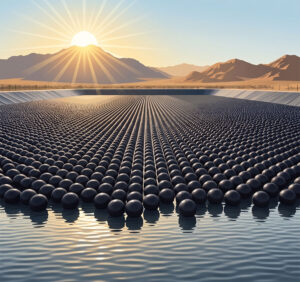
Larger hollow balls are also used in water surface applications, such as reservoirs and storage tanks. By floating on the liquid surface, they help reduce evaporation and limit sunlight exposure.
In most applications, plastic hollow balls are produced in natural or standard material colors for consistency and efficiency. In consumer-facing products, additional colors may be used to align with product design.
Materials Used in Plastic Hollow Balls
Plastic hollow balls are commonly made from PP and HDPE, each offering distinct performance characteristics depending on the application.
- PP (Polypropylene) is selected for applications that require surface smoothness, dimensional stability, and cost efficiency. It is widely used in personal care, cosmetic, and certain food-related products where consistent rolling performance and user experience are important. PP precision hollow balls can achieve a tolerance of around ±0.03 mm under standard production control.
- HDPE (High-Density Polyethylene) is selected for applications that require higher durability and environmental resistance. It offers strong chemical resistance, making it suitable for use in wastewater treatment and industrial systems where exposure to various substances is expected. HDPE also performs well in outdoor conditions due to its resistance to UV exposure, especially when combined with stabilizing additives. In addition, its impact resistance and low moisture absorption contribute to stable long-term performance.
Material selection depends on application requirements, operating conditions, and expected service life.
Conclusion
Plastic hollow balls are used across a wide range of applications, from personal care and food products to industrial systems and water management.
Their performance depends on selecting the appropriate type and material based on specific application requirements. Understanding how these factors relate to real-world use cases helps in identifying the most suitable solution for different environments.

-拷贝-300x300.jpg)